When planning a kitchen remodel, the hood is one of those decisions that doesn’t get much attention at first — but it should. Your hood affects ventilation, cooking comfort, and the overall look of your kitchen. At Deems Kitchens & Counters, we help homeowners navigate these choices every day. Here’s a straightforward breakdown of the three most common hood options and what makes each one a good fit depending on your space and lifestyle.
1.) Microwave Above the Range
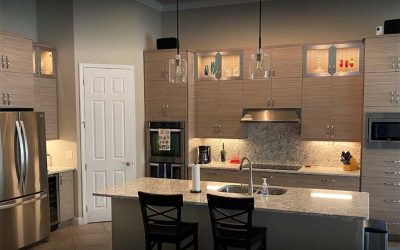
This is the most familiar setup for many homeowners. A microwave/hood combo sits directly above the cooktop and provides basic ventilation.
Pros
- Saves space — especially in smaller kitchens
- Budget‑friendly
- Combines two appliances into one
- Easy to replace
Cons
- Most models recirculate air back into the kitchen rather than venting outside
- Limited ventilation power
- Smaller capture area for smoke and steam
- Visually utilitarian
Most homeowners are surprised to learn that over‑the‑range microwaves typically don’t remove smoke or humidity from the home. They filter the air and push it back into the room, which is fine for light cooking, but not ideal for ventilation‑heavy kitchens.
2.) Stainless Steel Freestanding Hoods
These hoods mount to the wall or ceiling and stand alone as their own appliance. They’re common in modern, transitional, and professional‑style kitchens. Stainless hoods can be installed in‑series (tight between wall cabinets) or freestanding on a feature wall, depending on the layout.
Pros
- Strong ventilation performance
- Easy to clean
- Works well with high‑output ranges
- Sleek, modern appearance
Cons
- Shows fingerprints and smudges
- Can feel industrial in a warm, residential kitchen
- Limited design flexibility
Stainless hoods are a great choice when performance is the priority and the look fits the style of the kitchen.
3.) Wood Hoods
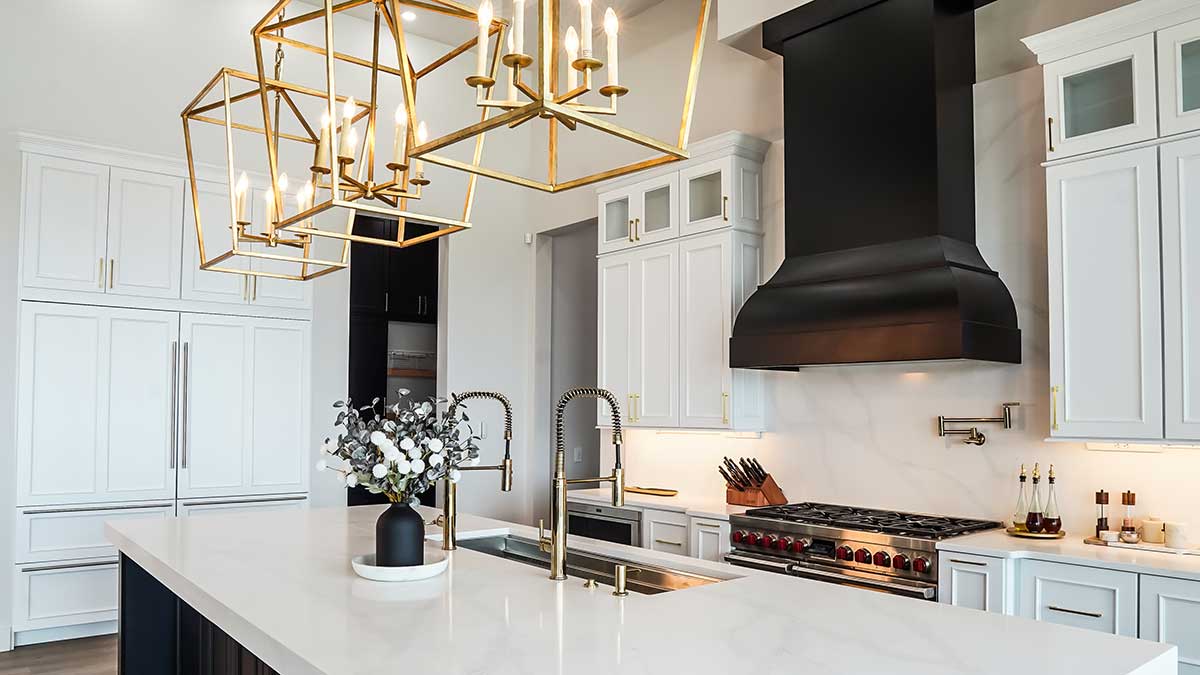
Wood hoods are built by the cabinet manufacturer and designed to match your cabinetry. They offer the most flexibility in terms of style, proportion, and integration.
There are three main types of wood hoods:
1.) In‑Series Wood Hoods
These hoods are directly abutted to the wall cabinets, creating a seamless, built‑in look.
Characteristics
- Matches your cabinet finish, door style, and trim
- Creates a continuous, cohesive run of cabinetry
- Works well in traditional and transitional kitchens
- Often more compact and integrated
Best For
Homeowners who want the hood to blend into the cabinetry rather than stand out.
2.) Freestanding Wood Hoods
These hoods stand alone between cabinets or on a feature wall. They’re larger, more sculptural, and often become the focal point of the kitchen.
Characteristics
- More design options (arched, tapered, box‑style, shiplap, decorative trim, etc.)
- Adds architectural interest
- Creates a visual centerpiece
- Still matches or deliberately contrasts the cabinetry for a cohesive look
Best For
Homeowners who want the hood to be a design feature rather than a background element.
3.) Alcove Wood Hoods
An alcove wood hood sits inside a recessed space framed by cabinetry on three sides. In many designs, the side panels or “legs” extend all the way down to the countertop, creating a fully framed cooking niche. In other layouts, the alcove is formed by wall cabinets above the countertop, with the backsplash running continuously behind the range. Both approaches create a built‑in, architectural look.
Characteristics
- Hood is recessed into a three‑sided cabinet “niche”
- Side panels may drop to the countertop or stop at the wall cabinets
- Produces a warm, furniture‑style look
- Works especially well in traditional, farmhouse, and cottage‑inspired kitchens
Best For
Homeowners who want a defined cooking area that feels intentional and custom without making the hood the dominant feature.
A quick note on ventilation
Switching to a wood hood — especially one that vents outside — may require new ducting or mechanical adjustments. Deems Kitchens & Counters does not perform HVAC work, but we coordinate with licensed trades when needed to ensure the hood is installed correctly.
How to Choose the Right Hood for Your Kitchen
Each option has its place:
- Microwave above range → best for simplicity and space‑saving
- Stainless steel hood → best for performance‑driven, modern kitchens
- Wood hood → best for a cohesive, furniture‑like look that ties the whole kitchen together
Wood hoods aren’t the right choice for every kitchen, but they do offer the most flexibility in terms of style and visual impact. And because they’re built by the same manufacturer as your cabinets, the match is precise and intentional.
See Your Options in Person
Visit our local showrooms to explore all three hood styles. Seeing them in person makes it much easier to picture what will work best in your home.