Last year’s 101 Class covered the basic terms — face frames, overlays, door styles, and finishes. Terminology 102 goes deeper. This guide explains the construction details behind the scenes: the parts you don’t always see but that determine how your cabinetry performs, ages, and functions.
Drawer Construction: The First Indicator of Quality
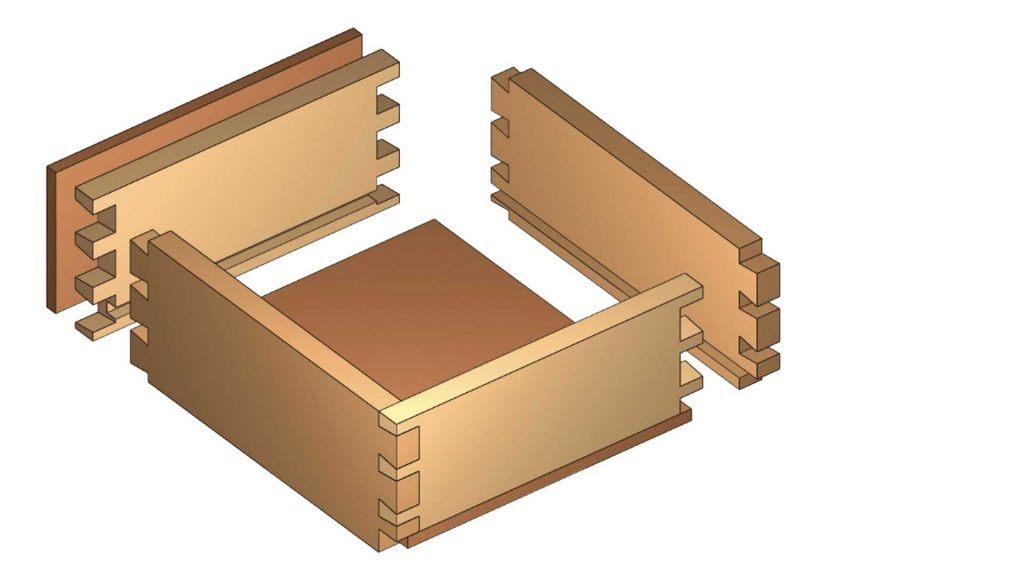
Dovetail Joint
A dovetail joint uses interlocking “tails and pins” cut into the wood. Why it matters:
- Creates a mechanical lock that resists pulling apart
- Holds up under heavy, repeated use
- Found in higher‑quality cabinetry
Butt Joint
Two boards are simply butted together and fastened with nails, staples, or screws. Why it matters:
- More budget‑friendly
- Relies on fasteners and glue, which can loosen over time
- Common in entry‑level cabinetry
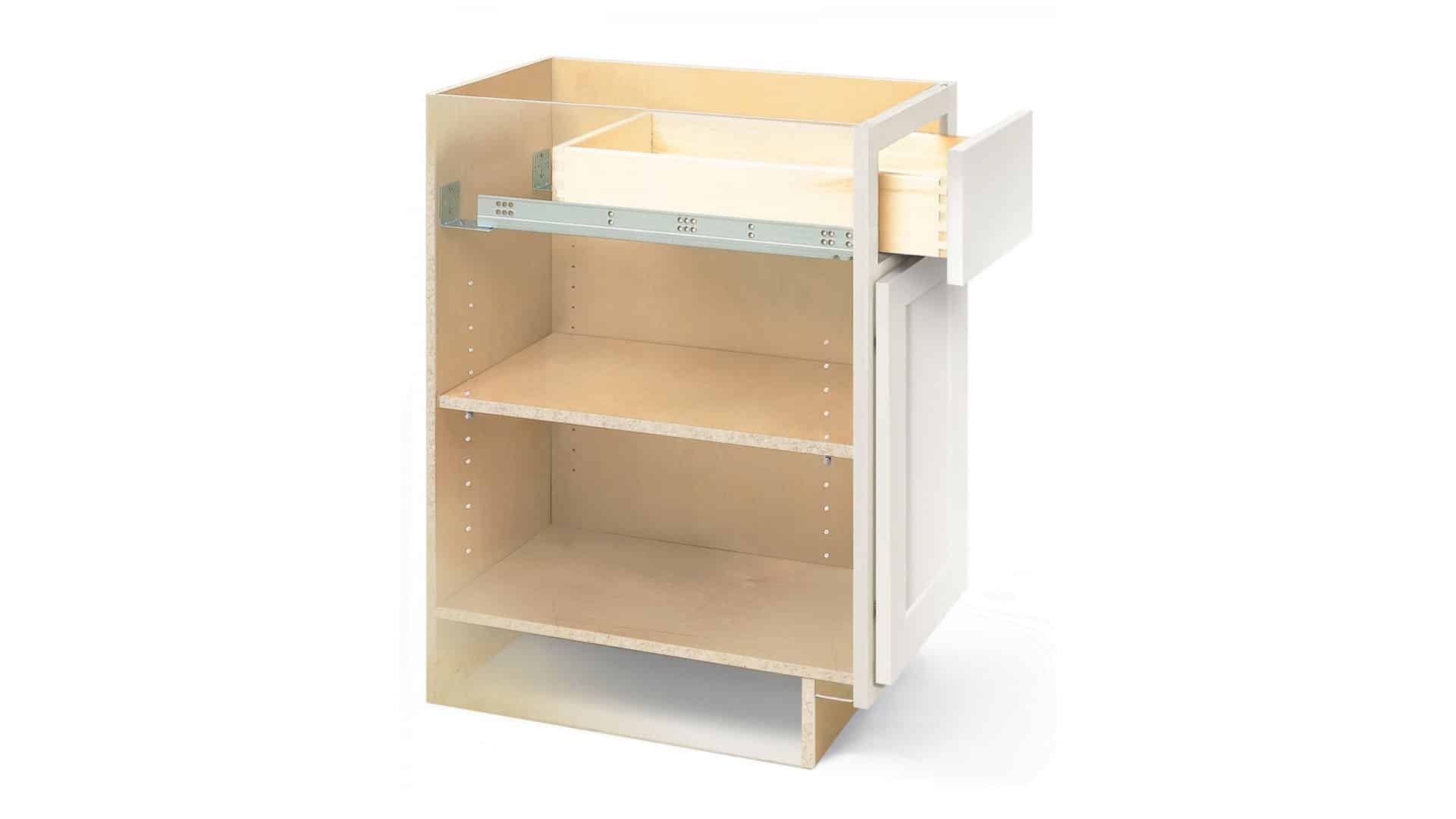
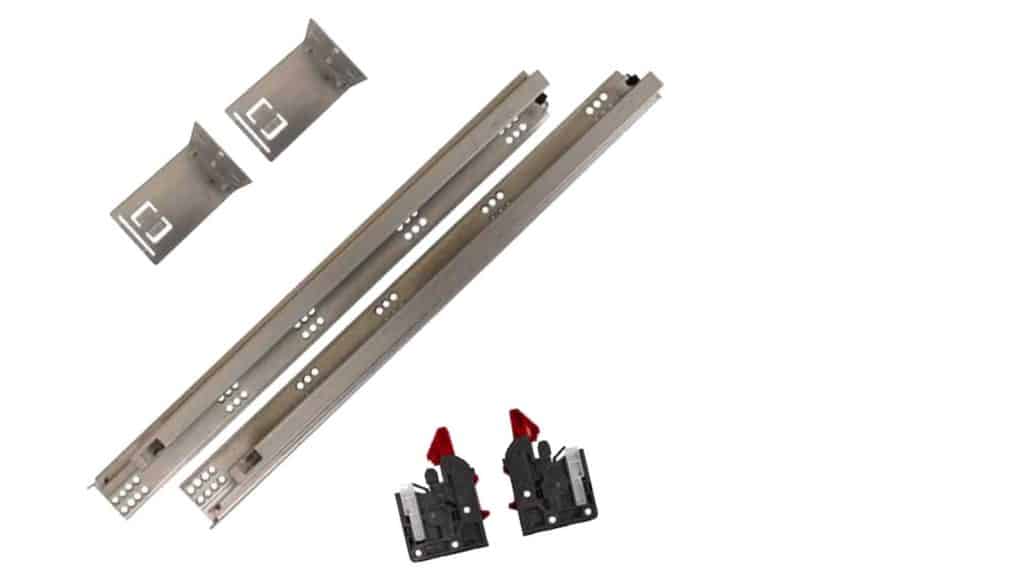
Undermount Soft‑Close Glides
Hardware mounted under the drawer that allows smooth, quiet closing. Why it matters:
- Supports more weight
- Keeps hardware hidden
- Extends drawer life and improves daily usability
Wood Characteristics: Understanding Natural Variation
Wood Grain Variation
Differences in pattern, texture, and density from one board to another. Why it matters:
- Affects how stain absorbs
- Creates natural color shifts
- Makes each door and drawer front unique
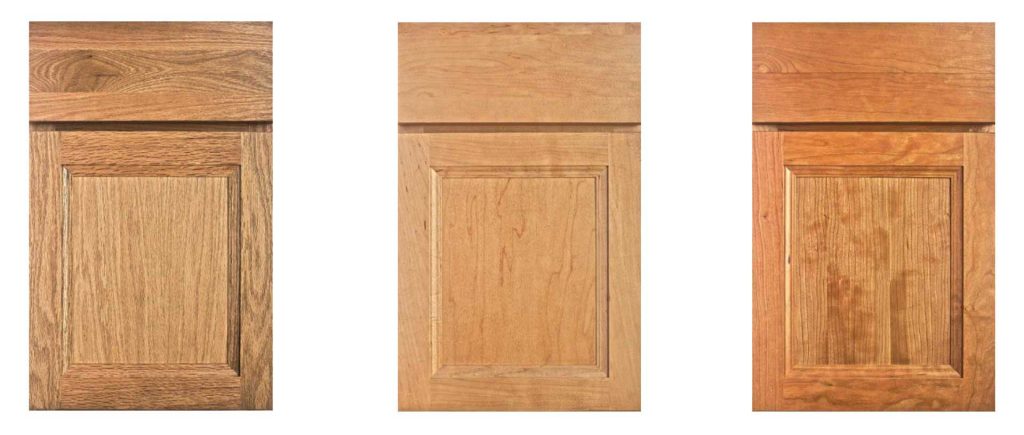
Stain Absorption
How wood takes in stain based on grain structure and density. Why it matters:
- No two pieces stain identically
- Variation is normal and expected
- Helps set realistic expectations for homeowners choosing stained cabinetry
Trim and Finishing Elements: Where Cabinets Become Custom
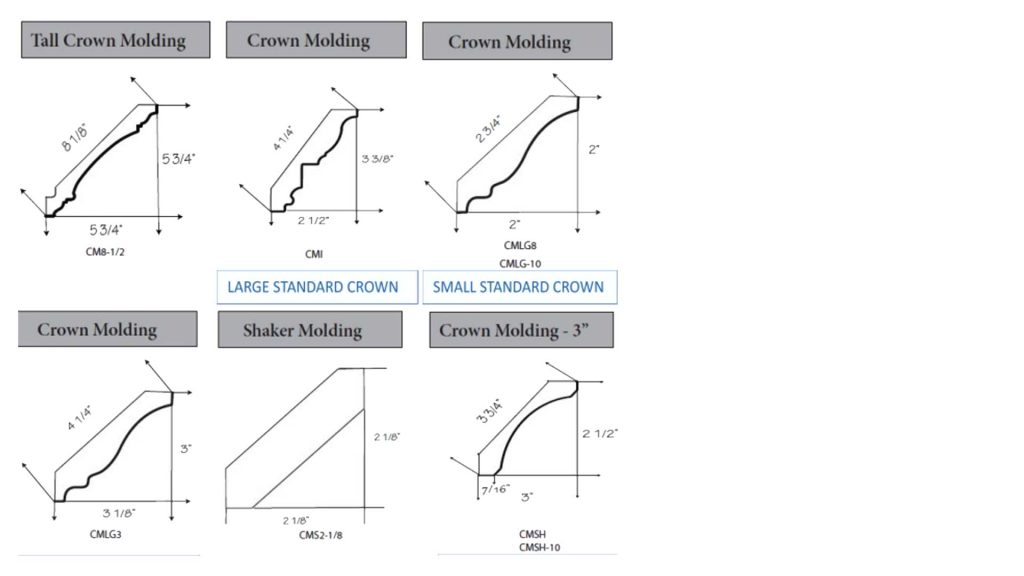
Crown Molding
Trim installed at the top of wall cabinets. Why it matters:
- Adds height
- Creates a finished, built‑in look
- Helps bridge uneven ceilings
Scribe Molding
A thin strip used to close small gaps between cabinets and walls. Why it matters:
- Ensures a clean, seamless transition
- Hides wall imperfections
- Essential for a polished installation
Furniture‑Style Details
Elements like decorative bases, posts, or corbels. Why they matter:
- Add architectural character
- Create a custom, furniture‑like appearance
- Often used on islands or focal points
Style and Construction Options: How Design Meets Function
Slab Front
A flat, single‑piece door or drawer front. Why it matters:
- Clean, modern look
- Easy to clean
- Works well in contemporary spaces
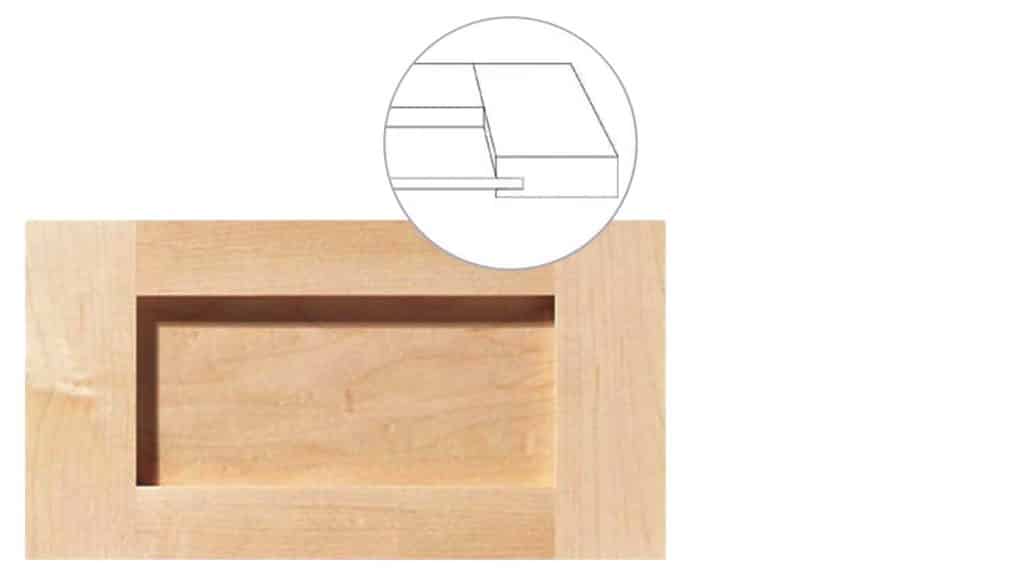
Shaker / Transitional Front
A recessed center panel with simple lines. Why it matters:
- Versatile and timeless
- Fits both modern and traditional homes
- Most popular style today
Raised Panel Front
A center panel that sits higher than the frame. Why it matters:
- More traditional appearance
- Adds depth and detail
- Often used in classic or formal designs
Stock vs. Semi‑Custom vs. Custom Cabinets
Stock: Pre‑set sizes, fastest lead times, most budget‑friendly Semi‑Custom: Adjustable sizes, more options, best value for most homeowners Custom: Built to exact specifications, unlimited flexibility, highest investment
Why These Definitions Matter
Understanding these terms helps homeowners:
- Compare cabinetry options accurately
- Avoid surprises during installation
- Choose features that match their lifestyle
- Make informed decisions about where to invest and where to save
Cabinetry is one of the most used elements in your home — the more you understand, the better your long‑term results.
Your Project, Made Clear
At Deems Kitchens & Counters, our goal is to simplify the process. We walk you through the details, explain the differences, and help you choose cabinetry that fits your home, your style, and your everyday life.
When you understand the “why” behind the terms, you make decisions with confidence — and your kitchen works better because of it.